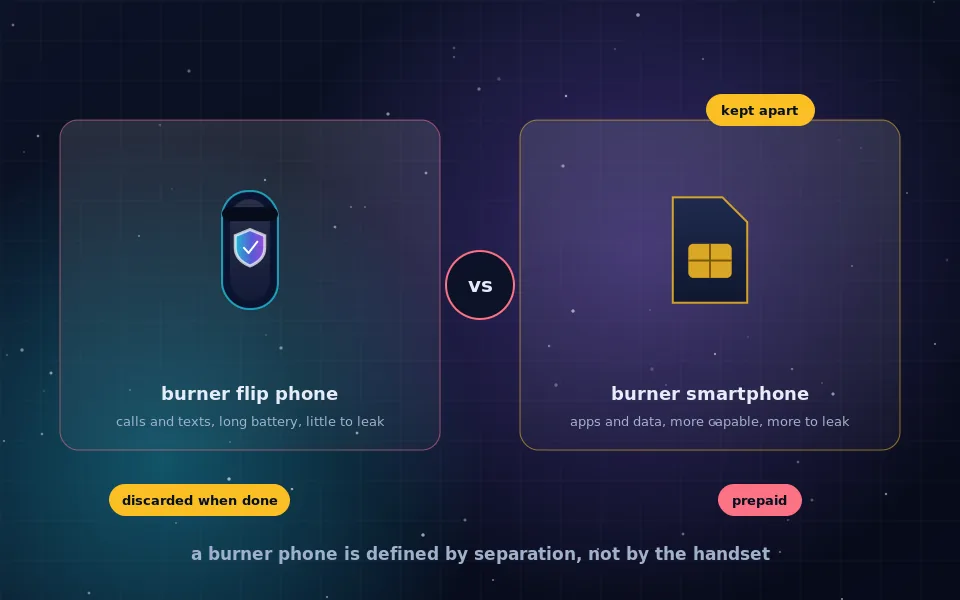
A burner cell phone is an inexpensive prepaid phone that you buy, use and eventually discard without ever connecting it to your identity, so that its number and its activity cannot be linked back to you. The handset can be a basic flip phone or a cheap smartphone; what makes it a burner is that it was bought without your name, is never carried or used alongside your personal phone in ways that connect them, and is retired when its purpose ends.
People want a burner for ordinary reasons: selling something online without giving out a personal number, dating safely, protecting a source, travelling in places where a main phone should stay home, or keeping a business or a difficult family situation separate. This guide explains what a burner is and is not, the difference between flip phones and smartphones as burners, how prepaid minutes and plans work, why a free burner phone does not exist, what makes a good travel phone, and the habits that keep the phone separate, which are harder than the purchase.
What makes a phone a burner
The handset is not the point. A burner is defined by three properties.
- Bought without your identity. Paid for in cash, at a shop that does not require ID for prepaid, and activated without giving your name or a personal email or payment card.
- Kept separate. Never used to call or message your personal contacts, never carried powered on together with your personal phone in the same places at the same times, never signed in to your accounts.
- Limited in life. Used for one purpose and retired, because the longer a phone is used the more patterns it accumulates and the more likely a slip connects it to you.
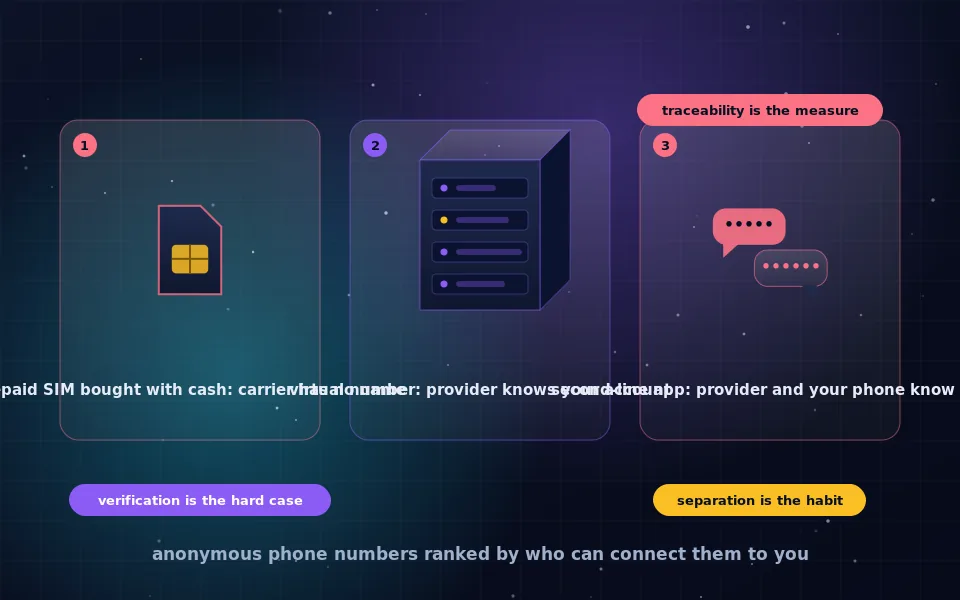
A prepaid phone bought with a card, activated with your email and carried in your pocket next to your main phone is a second phone. It may still be useful for keeping a number private from the people you give it to, and that is a legitimate goal, but it is not anonymous to the carrier or to anyone who can obtain carrier records.
Burner flip phone versus burner smartphone
The old image of a burner is a flip phone, and there are good reasons for that beyond nostalgia.
A burner flip phone does calls and texts. It has a small battery that lasts for days, almost no apps, no app store account, few sensors and little storage. There is very little on it to leak, and very little for it to phone home about. It is cheap enough to discard without regret. Its limits are the limits of calls and SMS: no encrypted messaging, no browsing to speak of.
A burner smartphone can run encrypted messaging apps, a browser and email. That capability comes with identifiers: a device ID, an advertising ID, an app store account, a Wi-Fi radio that broadcasts, location services, and dozens of apps that report in. Used as a burner it needs careful setup: no personal account, minimal apps installed from a fresh anonymous account or sideloaded, location and Wi-Fi off, and never connected to your home network. Done well it is more capable; done casually it is a tracking device that happens to have a different number.
For a simple separate line, choose the flip phone. Choose the smartphone only if you need apps and are prepared to configure it properly.
Prepaid plans and burner phones with minutes
Burners run on prepaid service: you buy credit or a fixed bundle of minutes, texts and data in advance, and nothing is billed to a name. Prepaid SIMs and top-up vouchers are sold at supermarkets, convenience stores and carrier shops.
A few practical points. Buy the SIM and the top-ups with cash. Check whether the plan requires online activation with personal details; some do not, some do, and the rules vary by country and carrier. Credit usually expires after a period of inactivity, so a burner kept for occasional use may need topping up to stay alive. Data on prepaid plans is often expensive per gigabyte; a flip phone sidesteps that entirely.
In some countries, all SIM cards must be registered to an identified person by law, and anonymous prepaid does not exist. In those places, a phone bought without identification is not possible legally, and the realistic options are a number from a virtual service, as the anonymous phone number guide on this site describes, with the caveats that apply.
Is there a free burner phone?
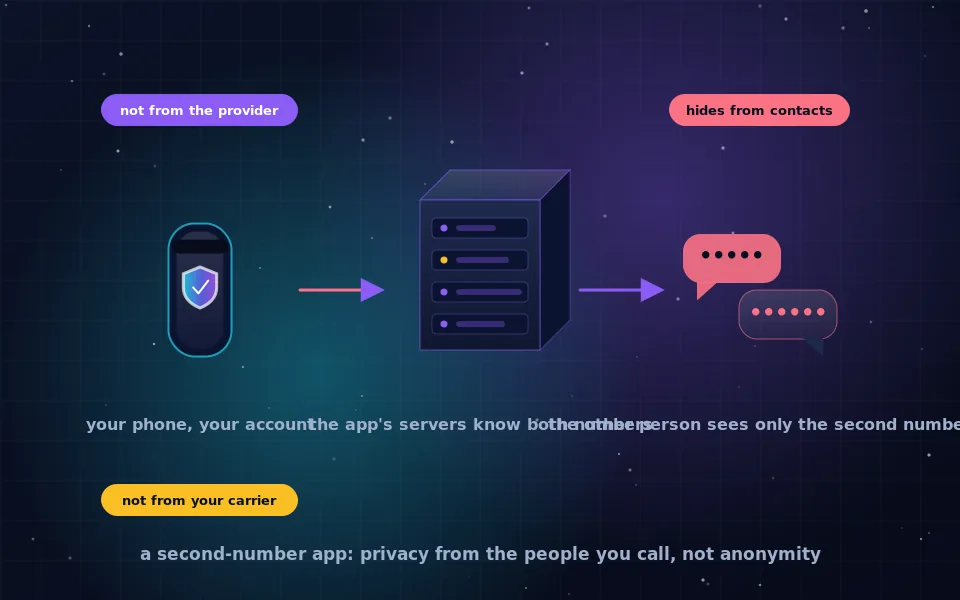
Searches for a free burner phone are common, and the honest answer is that there is no such thing in the anonymous sense. Carriers sometimes give away a basic handset with a prepaid plan, but the plan is registered. Assistance programmes provide phones to eligible people, and eligibility requires identification. Apps that give you a free second number are tied to your existing smartphone and your app store account, so they separate the number from the people you give it to but not from the provider or from your device; the burner apps guide on this site explains where they fit. A genuine burner costs the price of a cheap prepaid phone plus some credit, which is not much, and the cost is part of what makes it disposable.
The best burner phone for travel
Travel is one of the most reasonable uses for a separate phone, and here anonymity is usually secondary to containment: you want your main phone, with its accounts, photos and messages, not to be on unfamiliar networks, not to be inspected at a border, and not to be lost or stolen abroad.
The best travel burner is an unlocked, inexpensive handset that supports the network bands of your destination, paired with a local prepaid SIM bought on arrival. A basic smartphone from a mainstream manufacturer works well because it can run maps and a messaging app. Set it up with a fresh account created for the trip, install only what you need, and leave your personal accounts off it. Keep a copy of essential contacts on paper. When you return, wipe it and set it aside for the next trip. The handset does not need to be discarded after each use; the point is that it never becomes your main phone.
Keeping a burner separate: a seven-point checklist
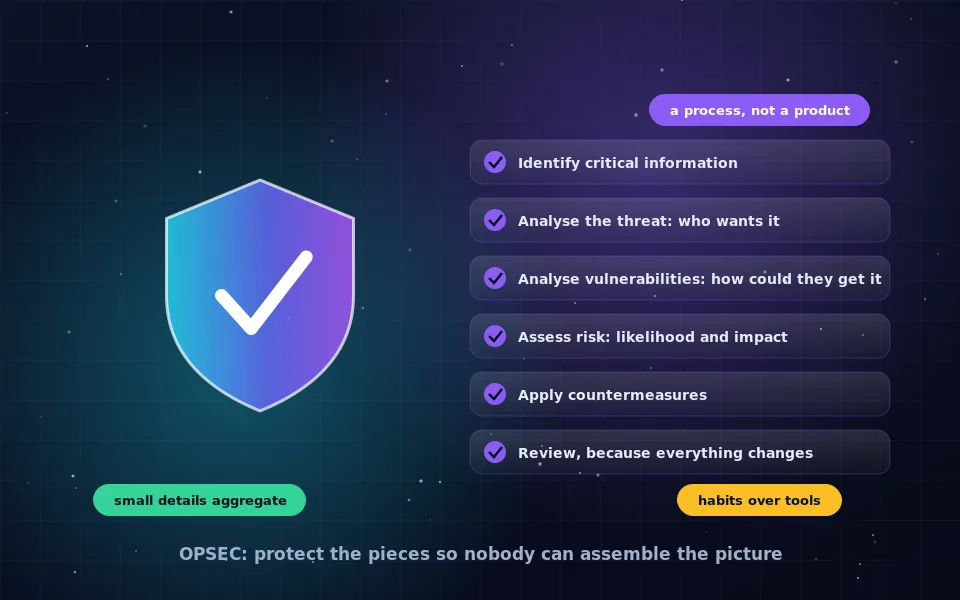
The separation is where burners fail, and the failure is usually a habit rather than a technology.
- Buy the phone, SIM and credit in cash, at a place away from your usual routine, without your personal phone switched on in your pocket.
- Never call or text your personal number, your family or your close contacts from it, and never call the burner from your personal phone.
- Do not carry both phones powered on together. Two phones that travel everywhere together are trivially linked by carrier location data.
- Do not turn the burner on at home or at work if the phone's purpose requires that it not be connected to you; location at first power-on is a classic link.
- Do not sign in to any personal account, connect to your home Wi-Fi, or pair it with your car or headphones.
- Give the number only to the people it is for, and when the purpose ends, stop using it and dispose of the SIM and phone separately.
- Assume the carrier records every call, text and location for the number. Separation protects you only as long as nothing in those records points at you.
What investigators and privacy trainers say
The habits above are drawn from how burners have actually been linked to their owners.
Digital-security trainers who teach journalists and at-risk people emphasise that burners are compromised by co-location and by contact patterns far more often than by anything technical: two phones that move together, or a burner that calls the same people the personal phone calls, are linked in minutes by anyone with carrier data.
Reporting on legal cases has repeatedly shown the same pattern, with prepaid phones tied to individuals through the location of their first activation, through calls to family members, or through being purchased on camera with a personal card.
Privacy researchers who study smartphones note that a modern handset used as a burner has far more channels to leak identity than a feature phone, which is why the flip phone remains the default recommendation for a simple separate line.
Buy the right phone for the job
Decide what the phone is for. If it is a separate number for selling, dating or a private matter, a cheap prepaid flip phone bought with cash and kept apart from your main phone is enough. If it is for travel, an inexpensive unlocked smartphone with a local SIM and a fresh account. In either case, the discipline of separation is what you are really buying, and it costs attention rather than money.
Frequently asked questions
What is a burner cell phone?
A burner is an inexpensive prepaid phone bought and used without linking it to your identity, kept for a limited purpose and then discarded or retired. The term originally referred to cheap flip phones but now covers any prepaid handset used this way.
Is there such a thing as a free burner phone?
Not really. Some carriers offer a free basic handset with a prepaid plan, and government assistance programmes provide phones to eligible people, but both require identification and so are not anonymous. A true burner costs the price of a cheap prepaid phone and some credit.
Burner flip phone or burner smartphone?
A flip phone does calls and texts, lasts days on a charge, and has almost nothing on it to leak. A smartphone can run messaging apps and a browser but carries identifiers, apps and sensors that undermine separation unless configured carefully. For a simple separate line, the flip phone is the better burner.
What is the best burner phone for travel?
An unlocked, inexpensive handset that supports the network bands where you are going, with a local prepaid SIM bought on arrival. Its value is not anonymity so much as keeping your main phone and accounts off unfamiliar networks and out of border inspections.
Are burner phones legal?
Prepaid phones are legal to buy and use in most countries. Some countries require identification to activate any SIM card, which makes anonymous purchase impossible there. Using any phone to harass, threaten or defraud is illegal regardless.
Last reviewed and updated on . Plain text version: /anonymity/burner-phone.txt.